Services · Mold + Soot Remediation
One method, applied where wet and chemical treatments fail: apartments with tenants in place, attics nobody wants to sand, crawl spaces that can't take more moisture, and framing that has to survive the cleanup.
The occupied building
A tenant reports mold; the units on either side are occupied; you need it handled quietly. We contain the affected unit under negative pressure, blast, HEPA-scrub the air, and hand back a paint-ready surface — usually same day.
Contents in the work zone are moved, covered, and photographed before containment goes up; it's all in your report.
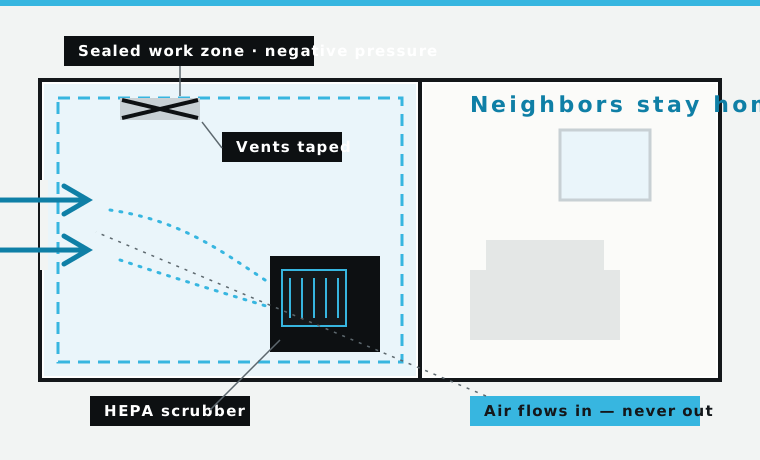
Mold that's grown through paper-faced gypsum gets cut out and replaced — no honest vendor blasts it. We tell you that at the walk-through, coordinate the demo and disposal, and blast the framing behind it so the rebuild starts clean. Where blasting shines is the structure: studs, sheathing, joists, subfloor.
The inspection killer
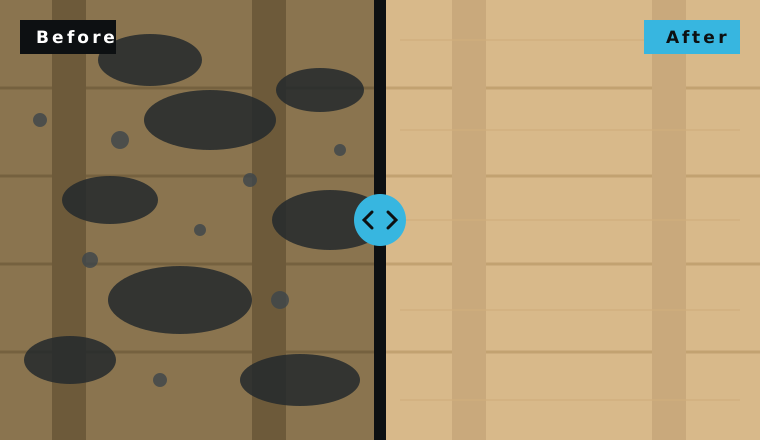
The classic inspection killer: mold bloom across the underside of the sheathing. Sanding it is days of miserable labor and dust; sealing over it just hides it from this inspection and hands it to the next one. Dry ice strips sheathing, rafters, and truss plates clean in hours, corners included — ready for the re-inspection photo.
The rest of the list
The last place on earth that needs more moisture. Dry ice cleans joists and subfloor in the space's own conditions — no washdown, no fog, no puddles under your vapor barrier. Pairs with your encapsulation contractor, or we can recommend one.
Laundry rooms, stairwells, boiler rooms — spaces you can't close for a week. Ask about night and weekend scheduling; the goal is simple: back in service the next morning.
Once your mitigation contractor has dried the structure, we remove what the water left growing. Right order of operations: dry-out first, removal second, source-fix third. Working a claim? Our scope and invoice are line-itemed for your adjuster, and the documentation is formatted to support the file, not complicate it.
A unit sat vacant, or came back with surfaces you'd rather strip than paint over. A blast-and-paint-ready turnover gets the unit listing-ready without solvent smells greeting the next showing. One scope boundary, stated plainly: we hand back a paint-ready surface — your painter takes it from there.
Fire & soot
Soot penetrates char and grain where wipes and sponges stop. Dry ice removes char and soot from framing, masonry, and decking without soaking materials that just survived a fire — and removing the soot, instead of sealing over it, is what gives odor treatment a real chance to work. We work alongside your restoration GC.
Full fire & soot page → Soot in the framing? Tell us about the property →
Send photos. We'll tell you honestly whether dry ice is the right tool — and when it isn't, we'll say so and tell you what is.
