Dry ice blasting · Denver & the Front Range
The short answer
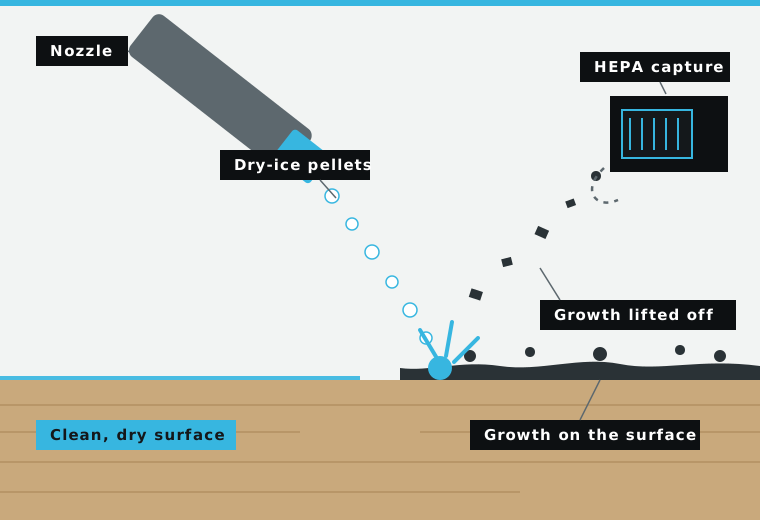
Dry ice blasting is a cleaning method that fires rice-sized pellets of frozen CO₂ — the same CO₂ used in dry ice for shipping and coolers — at a surface using compressed air. The pellets freeze the contaminant brittle and vaporize on impact, lifting mold or soot off without water, chemicals, or abrasive damage. The debris is captured by containment and HEPA filtration.
Three beats
The pellet chills the growth far below anything it can survive structurally; it turns brittle and loses its grip on the surface.
On impact the pellet flashes from solid to gas, expanding roughly 800×. That micro-explosion lifts the brittle layer off the surface and out of the grain.
The gas dissipates; the debris is pulled down by negative-pressure containment and HEPA-vacuumed. The surface is dry the moment we stop. No rinse. No residue. No dwell time.
The part that matters
Mold comes back for two reasons: growth left in place, and water nobody fixed. Wet methods add some moisture and leave dead growth behind; neither touches the reason it grew. Dry ice removes the growth and leaves the moisture math exactly as it found it — then the report points at the water, because removal without a source fix is a subscription, not a solution.
See the situations we handle — units, attics, crawl spaces →
The honest version
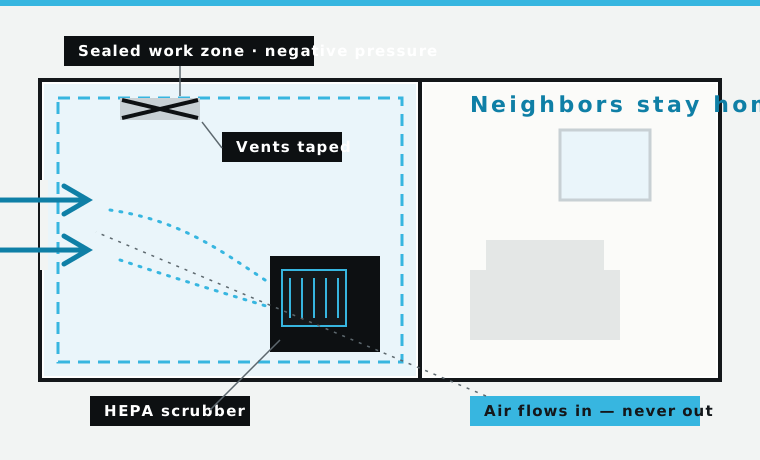
Blasting throws debris — and spores — into the air. That's exactly why containment matters more than the blasting: the work zone is sealed in plastic, HVAC vents are taped off, and HEPA air scrubbers keep the zone under negative pressure — air flows in, never out.
The pellets turn into carbon dioxide — the same gas in every breath you exhale and every can of sparkling water. It isn't toxic, but in an enclosed space too much of it displaces oxygen, so we treat it seriously: continuous ventilation and CO₂ monitors from setup to cleanup. Levels are back to normal before anyone re-enters — the meter confirms it, and the reading goes in the report.
Blasting is genuinely loud — hearing-protection territory inside the zone, and neighbors will hear it like heavy construction through the wall for the loud portion of the visit. We schedule around quiet hours and give tenants notice of exactly when.
For the person who actually lives there
Your day, plainly: you, your kids, and your pets are out of the unit while we work — typically the work hours of a single day. Neighbors stay home. Take pets with you: a closed door isn't containment, and the noise stresses animals. We'll tell you exactly what to move or cover before the day. When we're done there's no chemical smell and nothing to off-gas — the air in the zone is confirmed normal on the meter, and your manager gets word the same day that you're clear to come home.
FAQ
That's the right question — it's why containment matters more than the blasting. Before the machine turns on, we seal the work zone, tape off HVAC vents, and run HEPA scrubbers that keep the zone under negative pressure: air flows in, never out. Dislodged spores are captured, not released.
CO₂ is the gas in sparkling water and every exhale — not toxic, but it can displace oxygen in an enclosed space, so we ventilate continuously and monitor levels the entire job. The gas disperses; levels are confirmed normal on the meter before re-entry, and the reading goes in the report.
No chemical fumes, no off-gassing, no residue on floors. People and pets stay out of the contained work zone for the workday — not out of the building — and come home the same evening.
A few hours of construction-level noise through the wall and a sealed work zone down the hall. No smells, no evacuation — they stay home.
It removes the growth physically — off the surface and out of the grain — rather than poisoning it in place and leaving it there. Physical removal plus fixing the moisture is what EPA guidance and the IICRC S520 standard actually call for; dead mold left on a surface is still an allergen.
Only if the growth was left in place or the moisture comes back. That's true of every method — we're just the ones who say it. Our report documents where we found elevated moisture and the likely source so the cause gets fixed, not just the symptom.
Usually not. The work zone is contained and scrubbed; neighbors carry on, and the affected unit's occupants are out for the work hours, not days. If a job ever genuinely requires relocation, we'll tell you at the walk-through — not on blast day.
Mold that's grown through drywall means that section comes out — blasting shines on the structure behind it: studs, sheathing, joists, subfloor. If your mold is on a painted wall or ceiling, the fix is removal and replacement of that section, then cleaning any growth on the framing. We'll tell you which situation you have at the walk-through.
A typical single unit, attic section, or crawl space: one day. The timeline is confirmed in the written scope before you commit.
Fixed-price, in writing, after a free walk-through — never hourly surprises. The number moves with three things: access, square footage, and containment complexity.
No — Colorado doesn't license mold work, which is exactly why insurance that actually covers microbial work, documentation, and independent clearance testing matter more here than a logo wall. What we carry instead: insurance that covers mold work rather than a policy with the standard fungi exclusion, workers' comp, and a W-9 plus COI on file before we mobilize — see the full credentials list.
We don't grade our own homework. On request, we schedule independent third-party clearance testing as a line item in your scope — their report, not ours, verifies the air. For habitability cases we recommend it every time.
No chemical odor — there's nothing to off-gas. The musty smell is the colony, so removing it is what addresses the odor; if any smell persists, that points to a moisture source our report will flag.
Non-abrasive at the settings we use for wood, masonry, and metal — no material is removed, which is why the method is also used on electrical gear and delicate machinery.
Condensation — ordinary water vapor flash-chilled by the cold gas, like breath on a winter morning. Not smoke, not a chemical.
Machines exist to rent, but mold work is really containment, air handling, CO₂ management, and documentation — the blasting is the easy part. For anything involving tenants or a habitability clock, hire it done and get the paper trail.
Saturated or actively wet materials need drying first. Rotten wood needs replacement, not cleaning. Mold through drywall means replacement, not blasting. And if a surface is fine with a wipe-down, we'll tell you that at the walk-through instead of selling you a blast.
When conditions allow, we demo a small contained test patch during the assessment. One square foot from black to bare wood settles the question better than any web page. We're built for occupied buildings of every size — that includes your house; attics and crawl spaces are the most common homeowner calls. The same method handles grow rooms, kitchens, and industrial equipment — see What we clean in the footer.
