Restoration, Body & Fabrication Shops · Denver & the Front Range
Dry ice blasting takes undercoating, seam sealer, sound deadener, grease and soot off a shell — and then the dry ice turns to gas and leaves. Nothing to vacuum out of the rockers. Nothing trapped in the cowl to rattle in two years. No water on bare metal. We bring the machine to your bay and work around your queue.
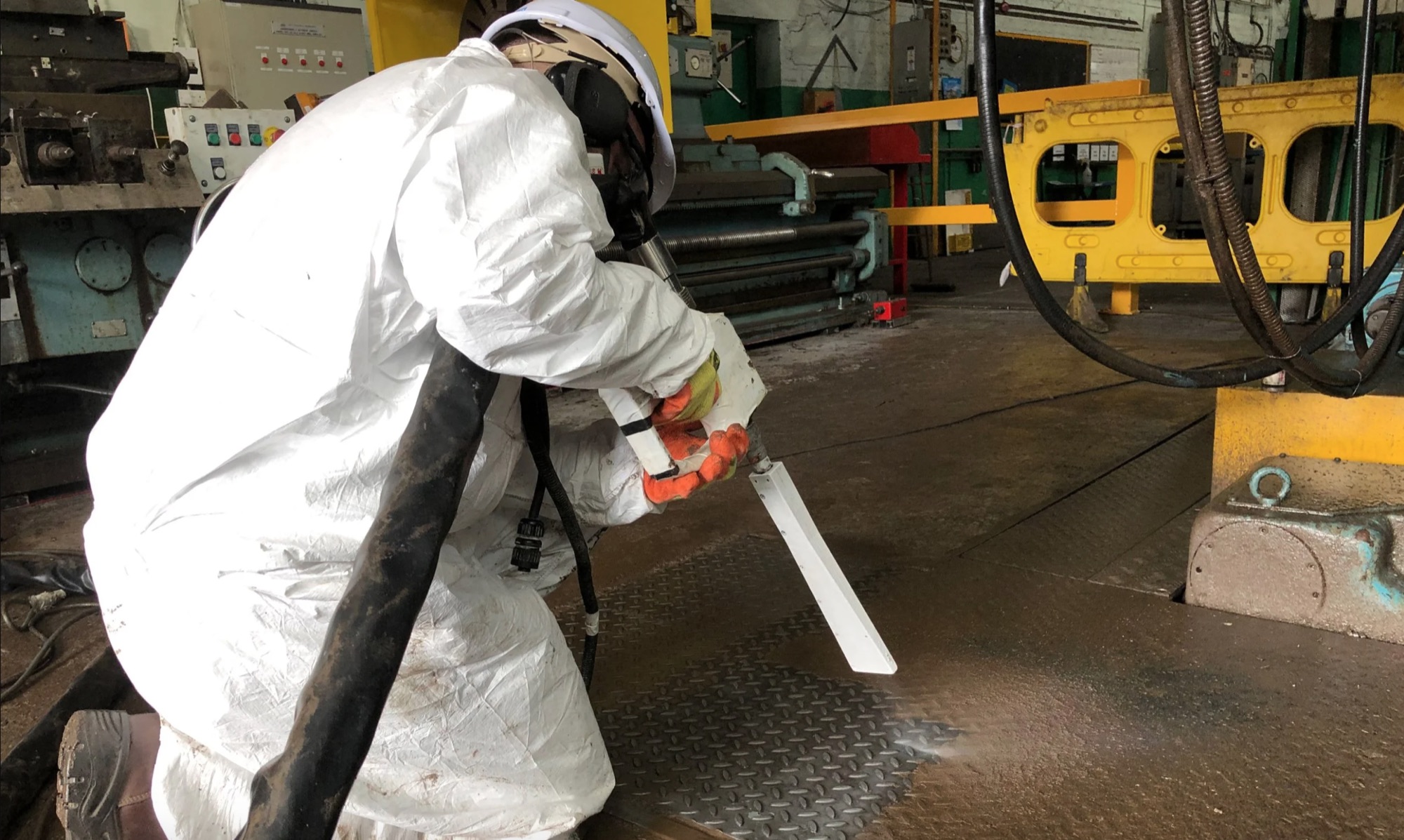
Why a shop calls us instead of blasting it
Every shop knows the real bill for media blasting a unibody isn't the blasting — it's the week afterward. Sand and grit get into the frame rails, the cowl, the transmission tunnel and the seams, and they work their way out for years. Soda leaves a residue that has to be neutralized before anything gets sprayed, or the paint lets go later and nobody can prove why.
Dry ice is frozen CO₂. It's soft — it doesn't cut steel and it doesn't profile the panel — and on impact it sublimates straight to gas. There is no media left in the car because there is no media. What's on your floor at the end is the coating that came off, and you sweep it up.
It's also a dry process, which matters twice: no flash rust on metal you just got clean, and no water pushed into seams and cavities you're about to seal. And because it's non-conductive, an engine bay with a harness still in it isn't the problem it is with a pressure washer.
On a vehicle
Coatings, contamination and buildup — on a shell, a frame, a driveline or a bay you can't get wet.
Straight answers
Dry ice removes what is on the metal. It does not take heavy rust, pitting or mill scale down to white metal — that is still an abrasive job. The honest way to use us is first: we pull the undercoating, sealer and grease off, and what's underneath is visible and clean before anyone decides how much abrasive work is actually left. Plenty of shells need far less than the estimate assumed.
Steel and cured paint take it well. Carbon fibre, fibreglass, thin aged single-stage paint, soft trim and older decals do not all behave the same way, and we are not going to promise a result on a substrate we have not tested on your part. On anything delicate we shoot a test area first, you look at it, and then we agree whether to carry on.
The machine is about as loud as a pressure washer and the exhaust is CO₂ gas, so the bay needs ventilation and the door open — we bring a monitor and we will tell you where we need air moving. If your bay can't be ventilated that day, that's a reschedule, not a workaround.
We are the strip-and-clean step and nothing else. That's deliberate: you keep the customer, the job and the margin, and we hand the shell back ready for your work. We are a subcontractor to your shop, not a competitor for your customer.
How it works with a shop
We're mobile — the blaster, the compressor and the extraction come to you, so the car never leaves your control and never gets added to somebody else's backlog. Most shells are a single day in the bay. Send photos of what you're up against and we'll tell you before we load the truck whether it's a dry-ice job, an abrasive job, or both.
Shops with a steady queue book a standing bay day — same day each month, we clear whatever is staged, you plan around it. That's how the math works in your favour: one mobilization, several cars, and the strip step stops being the thing that holds up the schedule.
Worth saying plainly: Mile High Blasters is a new company, owner-operated. Thanh came up in the car world before he came up in decontamination, which is exactly why this page is careful about what the method does and doesn't do — he has been the guy on the other side of the estimate. The method itself is not new; dry ice blasting has decades of track record in restoration and industrial work. What you're evaluating is a proven process in the hands of an owner who will tell you at the walk-through when it's the wrong tool.
Photos of the underside and the bay are usually enough for a straight answer. Most assessments happen within the week.
